Monday, 17 December 2012

Rope by Alfred Hitchcock
Rope is another Hitchcock film that has a great element of suspense. The film is a 'What if film' that is based on a true story.
The film tells the story of Phillip and Brandon, two young ambiguously killers, (inspired no doubt by Leopold and Loeb) who commit the perfect murder of a young man and then host a dinner party that evening, dropping clues and daring guests to grow more suspicious of their jests and the man who has failed to make an appearance. The murder is committed just as the film begins with an eerie cavalier approach and aftermath. The question is do they get caught?

The film tells the story of Phillip and Brandon, two young ambiguously killers, (inspired no doubt by Leopold and Loeb) who commit the perfect murder of a young man and then host a dinner party that evening, dropping clues and daring guests to grow more suspicious of their jests and the man who has failed to make an appearance. The murder is committed just as the film begins with an eerie cavalier approach and aftermath. The question is do they get caught?
Sunday, 9 December 2012
Plots
Without cause and effect there is no plot. Without cause and effect, events are simply episodic happenings.
Plot
Plot
- Plot refers to a chain of related events.
- Exposition lays the groundwork for the plot.
- Setting is time and place.
- Rising action involves complications and difficulties.
- Climax is the high point of suspense.
- The falling action is anything that occurs as a result of the climax.
- Denouement is wrapping everything up.
Lighting
Lighting

Key Lighting; This is the brightest and most influential.

The Back Light; This helps counteract the effect of key lighting and creates a silhouette.

Filler Light; This type of light helps to soften the harsh shadows that the use of both key and back light create.
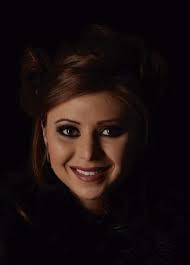
Lighting Source
Under Lighting; This is when the main source of light is coming from below the subject.

Top Lighting; This is when the main source of light is coming from above the subject, high lighting facial features.
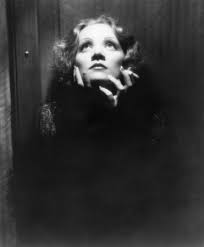
Back Lighting; This is when the main light source is coming from behind the subject.

Low and High Key Lighting
Low Key Lighting is created by using only key and back lighting.
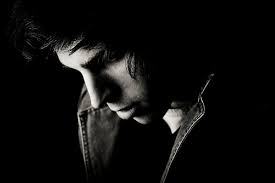
High Key Lighting is created when most types of lighting is used.

Key Lighting; This is the brightest and most influential.
The Back Light; This helps counteract the effect of key lighting and creates a silhouette.
Filler Light; This type of light helps to soften the harsh shadows that the use of both key and back light create.
Lighting Source
Under Lighting; This is when the main source of light is coming from below the subject.
Top Lighting; This is when the main source of light is coming from above the subject, high lighting facial features.
Back Lighting; This is when the main light source is coming from behind the subject.
Low and High Key Lighting
Low Key Lighting is created by using only key and back lighting.
High Key Lighting is created when most types of lighting is used.
Montage theory
A montage is a collection of very short scenes, sometimes only a single shot each, designed to show a series of actions over time. Depending on the needs of the sequence, there are a few different options for how to write a montage in screenplay form.
Luv Kuleshov was among the very first to theorize about the relatively young medium of the cinema in the 1920's. He argued that editing a film is like constructing a building. Brick by brick the building is raised. Or in this case 'shot by shot the film is made'
Luv Kuleshov a Russian director conducted an experiment that proves his point. He took an old film clip of a head shot of a noted Russian actor and inter-cut the shot with different images.
Example
An hour or so into Sylvester Stallone's Rocky Balboa, he decides it's his destiny to strap on the gloves one more time. Bill Conti's theme music kicks in, and Rocky hits the floor for a set of one-armed push-ups, then lifts some heavy-looking metal chains and beats a side of beef. It's an inspirational, back-to-basics training montage.
Luv Kuleshov was among the very first to theorize about the relatively young medium of the cinema in the 1920's. He argued that editing a film is like constructing a building. Brick by brick the building is raised. Or in this case 'shot by shot the film is made'
Luv Kuleshov a Russian director conducted an experiment that proves his point. He took an old film clip of a head shot of a noted Russian actor and inter-cut the shot with different images.
Example
An hour or so into Sylvester Stallone's Rocky Balboa, he decides it's his destiny to strap on the gloves one more time. Bill Conti's theme music kicks in, and Rocky hits the floor for a set of one-armed push-ups, then lifts some heavy-looking metal chains and beats a side of beef. It's an inspirational, back-to-basics training montage.
Friday, 7 December 2012
Certification
U
What does U mean?
The U symbol stands for Universal. A U film should be suitable for audiences aged four and over.
Is violence or horror permitted in a U film?
A U film may include brief fight scenes or moments where characters are placed in danger. However, moments of emotional stress or threat will be quickly resolved and the outcome will be reassuring.
There may be brief scary scenes and moments where the characters are placed in danger. As with violence, however, these scenes will be balanced by reassuring elements, such as comic interludes or music.
‘Baddie’ characters may carry or use weapons, but there will be no emphasis on these. Child or ‘hero’ characters are unlikely to use any kind of weapon outside, for example, historical settings.
What sorts of films are usually passed at U?
A U film can explore many themes, as long as they appropriate to a young audience. This doesn’t mean that all films rated U are children’s films, some adult themes may be rated as a U but not exactly a child's film.
A children’s work at U will generally contain positive messages about loyalty, honesty and friendship, particularly amongst children. The film will have a happy ending for the child.
PG
What does PG mean?
PG stands for Parental Guidance. This means a film is suitable for all people viewing it, but some scenes may be unsuitable for younger children. A PG film should not disturb a child aged around eight or older.
What sort of themes are passed at PG?
No theme is prohibited at PG, as long as it is treated in a way appropriate to the category. PG works can explore challenging issues such as domestic violence, bereavement or racism without upsetting a lot of people.
In a PG work, illegal or antisocial behaviour, such as bullying, will not be condoned or seen to go unchallenged. Smoking and drinking will not be promoted and if child characters are seen smoking or drinking, there should be a clear message that this is bad.
As far as horror goes, we allow some 'jump' moments and scary scenes, but sequences showing significant or realistic violence, horror or threat must not be prolonged.
12A
What does the 12A symbol mean?
12A means that anyone aged 12 or over can go and see the film unaccompanied. The A stands for 'accompanied' and 'advisory'. Children younger than 12 may see the film if they are accompanied by an adult (eg someone over the age of 18), who must watch the film with them.
Is there a lower age limit for a 12A film?
No. However, the BBFC considers the content of 12A rated films to be suitable for children aged 12 and over, and we would not recommend taking very young children to see them. Works classified at these categories may upset children under 12 or contain material which many parents will find unsuitable for them.
15
What does the 15 symbol mean?
No-one under 15 is allowed to see a 15 film at the cinema or buy/rent a ‘15’ rated DVD. 15 rated works are not suitable for children under 15 years of age.
Are there any limits on what sort of theme a work can have at 15?
No theme is prohibited, provided the treatment is appropriate for 15 year olds
18
What does the 18 symbol mean?
Films rated 18 are for adults. No-one under 18 is allowed to see an 18 film at the cinema or buy/rent an 18 rated DVD. No 18 rated works are suitable for children.
Are there any limits on what sort of theme a work can have at 18?
No theme is prohibited at 18. Adults are free to pick their own entertainment within the law, so it is possible some themes tackled at 18 may be offensive even to some adult viewers.
Kyle and Billy motd
We was given the task to film a short sound sequence using different camera shots.
Monday, 3 December 2012
Kill Bill volume 1 - opening analysis
Kill Bill volume 1
Lighting; The lighting in the opening scene is black ans white.
Sound; Before the scene even starts you see a black back ground and hear heavy breathing whilst a man talks over a lady. The sound then is turned to quiet talking between friends whilst you hear whistling quiet which is consistent and gets louder when she is walking outside the church. After hearing a blurred gun shot music kicks in with the song 'Bang Bang'
Mise-en-scene;
Before the scene starts you see a bond like japanese cartoon opening which uses intertextuality From the first shot you are shown a black background with a slogan on the screen to hide you from the reality of the scene.
Collateral opening analysis
At the beginning of the opening scene you see two men walking towards each other both smartly dressed and carrying suitcases. Then it switches to a cab driver set in LA, straight away you are wondering what is going on.
Lighting; The lighting in the opening scene is at first bright and natural whilst in the street the main lights are the street lamps. This is because there are two men walking towards each other through busy streets. The second part of the opening scene the lighting switches to a darker focus.
Sound; The music is like a calm heartbeat which is consistent and is simular to the music played in the Drive. sounds are enhanced when the two men swap brief cases and walk away from each other and once again when Jamie Foxx is driving the cab.
Mise-en-scene;
at first the scene is busy and airing disguising the fact the two men are swapping suit cases and by the second part you are cramped in a taxi. This all adds to the mise-en-scene as it reflects on the personality of each character.
Lighting; The lighting in the opening scene is at first bright and natural whilst in the street the main lights are the street lamps. This is because there are two men walking towards each other through busy streets. The second part of the opening scene the lighting switches to a darker focus.
Sound; The music is like a calm heartbeat which is consistent and is simular to the music played in the Drive. sounds are enhanced when the two men swap brief cases and walk away from each other and once again when Jamie Foxx is driving the cab.
Mise-en-scene;
at first the scene is busy and airing disguising the fact the two men are swapping suit cases and by the second part you are cramped in a taxi. This all adds to the mise-en-scene as it reflects on the personality of each character.
Saturday, 1 December 2012
Drive- opening analysis
The opening scene to the film Drive is a slick dark scene with one thing that stands out. That one thing is the scorpion on the back of his jacket, why is this you may ask? well its all part of making a appeal to its audience. i am going to analyse the opening film.
Lighting; The lighting in the opening scene is dark and whilst in the street the main lights are the street lamps. this is because the main character is trying to hide so doesn't want to stand out to bright so there fore uses natural light.
Sound; The music is like a calm heartbeat which is consistent and gets louder when he is waiting. enhanced sounds are used when he is waiting for the two robbers and you here fast ticking on the clock this may represent the robbers heartbeat as the drivers is still calm.
Mise-en-scene;
From the first shot you are imediatley focused on this one light which is the Scorpion on the back of the mans jacket. this gives us as an audience something to think about as we are drawn to it.
Lighting; The lighting in the opening scene is dark and whilst in the street the main lights are the street lamps. this is because the main character is trying to hide so doesn't want to stand out to bright so there fore uses natural light.
Sound; The music is like a calm heartbeat which is consistent and gets louder when he is waiting. enhanced sounds are used when he is waiting for the two robbers and you here fast ticking on the clock this may represent the robbers heartbeat as the drivers is still calm.
Mise-en-scene;
From the first shot you are imediatley focused on this one light which is the Scorpion on the back of the mans jacket. this gives us as an audience something to think about as we are drawn to it.
Legal Thrillers
The legal thriller is a sub-genre of thriller and crime in which the major characters are lawyers and their employees. The system of justice itself is always a major part of these types of thrillers, at times almost functioning as one of the characters. In this way, the legal system provides the framework for the legal thriller.
Usually, crusading lawyers become involved in proving their cases, usually their client's innocence of the crime of which he is accused, or the culpability of a corrupt corporation which has covered up its malfeasance until this point to such an extent that they imperil their own interpersonal relationships and frequently, their own lives.
A good example of a legal thriller is Law abiding citizen
Gerard Butler and Jamie Foxx both turn in solid performances in Law Abiding Citizen. The focus of the film is the dynamic between a victim’s family that is dealing with a murder and the legal system that helped enable it.
Conspiracy Thrillers
Conspiracy thrillers are often journalists or investigators who find themselves pulling on a small thread which unravels a vast conspiracy. The complexities of historical fact are recast as a morality play in which bad people cause bad events, and good people identify and defeat them. A common theme in such works is that characters uncovering the conspiracy encounter difficulty ascertaining the truth amid the deceptions: rumors, lies, propaganda, and counter-propaganda build upon one another until what is conspiracy and what is coincidence become entangled.
An example of a conspiracy thriller is The insider.
The Insider is a 1999 film directed by Michael Mann based on the true story of a 60 Minutes segment about tobacco industry whistleblower Jeffrey Wigand.
Political thrillers
Unlike real-life politics, Whether they're ultra serious or deliciously satirical, these are a baker's dozen that get our vote. A political thriller is usually about the politics and trying to win votes to run the country between good and evil. Usually a political thriller gives us mystery, intrigue, mudslinging, and the occasional assassination.
An example of a political thriller is The Manchurian candidate
The Manchurian Candidate was a film far ahead of its time. Its themes of thought control, political assassination, and multinational conspiracy were hardly common currency in 1962, and while its outlook is sometimes informed by Cold War paranoia. It opens with a group of soldiers whooping it up in a bar in Korea as their commander, Sgt. Raymond Shaw arrives to inform them that they're back on duty. While on patrol, Shaw and his troops are ambushed by Korean troops. Months later, Shaw is receiving a hero's welcome as he returns to the United States to accept the Congressional Medal of Honor, and several of the soldiers who served under Shaw repeatedly refer to him as "the bravest, finest, most lovable man I ever met." It soon becomes evident that after their capture by the Koreans, Shaw and his men were subjected to an series of brainwashing before their release.
An example of a political thriller is The Manchurian candidate
The Manchurian Candidate was a film far ahead of its time. Its themes of thought control, political assassination, and multinational conspiracy were hardly common currency in 1962, and while its outlook is sometimes informed by Cold War paranoia. It opens with a group of soldiers whooping it up in a bar in Korea as their commander, Sgt. Raymond Shaw arrives to inform them that they're back on duty. While on patrol, Shaw and his troops are ambushed by Korean troops. Months later, Shaw is receiving a hero's welcome as he returns to the United States to accept the Congressional Medal of Honor, and several of the soldiers who served under Shaw repeatedly refer to him as "the bravest, finest, most lovable man I ever met." It soon becomes evident that after their capture by the Koreans, Shaw and his men were subjected to an series of brainwashing before their release.
Psychological Thrillers
A psychological thriller is a film that deals with suspense by getting into your mind. Instead of just being about blood and gore, the plot focuses on how the mind can be disturbed and horrified. These psychological thriller films may have lots of action and some blood, but the main intent is the element of the psyche.
A good example of a Psychological thriller is Zodiac.
Zodiac is based on a true story about a serial killer in San Francisco, a yet unsolved crime today. The killer sends messages to the newspaper. The cartoonist from the newspaper is able to help crack the codes the killer uses in his messages. The killer haunts the mind of the reporter so badly that he ends up leaving his job.
A good example of a Psychological thriller is Zodiac.
Zodiac is based on a true story about a serial killer in San Francisco, a yet unsolved crime today. The killer sends messages to the newspaper. The cartoonist from the newspaper is able to help crack the codes the killer uses in his messages. The killer haunts the mind of the reporter so badly that he ends up leaving his job.
Friday, 30 November 2012
Directors
The art of directing or good story telling is the ability to plot a story in the most compelling way for an audience. Plotting a filmed story means deciding which events, characters and settings will be seen and used in the film and what elements will be presented it gain the maximum dramatic effect to engage the viewer.
The directors job is to ensure that all the finance elements are drawn together to best suit the story being told. This means the director is in charge of sound, lighting, SFX and also mise en scene.
 Noel Clarke
The directors job is to ensure that all the finance elements are drawn together to best suit the story being told. This means the director is in charge of sound, lighting, SFX and also mise en scene.
what are stories and plots?
A film with a story will normally have a beginning, middle and end. Films don't always necessarily follow that order though, some films star with the ending to unfold the mystery of the film.
A story is a series of events recorded in their chronological order (linear narrative)
A plot is a series of events deliberately arranged so it will reveal their dramatic story line and also the emotion significance (non-linear narrative)
A story is a series of events recorded in their chronological order (linear narrative)
A plot is a series of events deliberately arranged so it will reveal their dramatic story line and also the emotion significance (non-linear narrative)
Thursday, 29 November 2012
Conventions of thrillers
Conventions of thriller
A Thriller is a type of film genre that contains many sub-genres such as crime thriller, mystery thriller and action thriller. The genre itself uses a wide range of devices in order to build and create effects upon the audience, such as creating tension and suspense as a way of building up exhilaration. The Thriller genre is similar to the Horror genre, with it's two main subgenres being horror thrillers and psychological thrillers. A conventional thriller usually takes place within an isolated location. . There are several characteristics which help to define a thriller.
- They usually involve binary opposites as represented through the protagonist and antagonist. The antagonist sometimes breaks the conventions of thriller by trying to Vandoeuvre the protagonist.
- Complex narratives are also used where misleading clues and pieces of evidence are given. this is also known as a redherring and it creates a high amount of suspense.
- They typically involve sudden plot twists as a way of keeping the audience engaged in the film.
- A dark, isolated location is often used to create the impression that the protagonist is alone and vulnerable and will most certainly suffer horrific encounters in order to break free.
- They also keep the audience in suspense as they are unsure as to what is going to happen next. Also known as a cliffhanger.
- Some are simply straight mysteries with clever, horrific, or intriguing antagonists, while others be focused on the inner workings of the legal system, environmental threats, technology, or natural disasters.
- One long-established thriller genre is the spy thriller, featuring an often heroic and dashing spy who must confront whichever enemy happens to be popular at the moment.
- The majority of thrillers often incorporate a psychological aspect, where it forces the audience to examine the actions/motives of characters in order to distinguish their back story as a way of figuring out the plot.

The names Bond.. James Bond
James Bond Spy Thrillers:
James Bond '007' character that was employed for Her Majesty's Secret Service was loosely based on the spy character in Britisher Ian Fleming's twelve James Bond novels. Before the movies, Bond made his first appearance on TV, debuting on CBS in 1954, with Barry Nelson as the 007 agent named Jimmy Bond in an adaptation of Fleming's first Bond novel, Casino Royale.
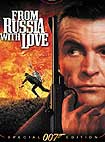
The first in a successful series of suspenseful, special agent 007 James Bond films, begun in the Cold-War 1960s and serving as a metaphor for the threat of Communism, was Dr. No (1962) followed soon after by the definitive Bond film, From Russia With Love (1963), and the polished Goldfinger (1964). The intriguing superhero lead role has been played by six actors so far:
James Bond '007' character that was employed for Her Majesty's Secret Service was loosely based on the spy character in Britisher Ian Fleming's twelve James Bond novels. Before the movies, Bond made his first appearance on TV, debuting on CBS in 1954, with Barry Nelson as the 007 agent named Jimmy Bond in an adaptation of Fleming's first Bond novel, Casino Royale.
The first in a successful series of suspenseful, special agent 007 James Bond films, begun in the Cold-War 1960s and serving as a metaphor for the threat of Communism, was Dr. No (1962) followed soon after by the definitive Bond film, From Russia With Love (1963), and the polished Goldfinger (1964). The intriguing superhero lead role has been played by six actors so far:
- Sean Connery
- George Lazenby
- Roger Moore
- Timothy Dalton
- Pierce Brosnan
- Daniel Craig
Subscribe to:
Posts (Atom)