The directors job is to ensure that all the finance elements are drawn together to best suit the story being told. This means the director is in charge of sound, lighting, SFX and also mise en scene.
Friday, 30 November 2012
Directors
The art of directing or good story telling is the ability to plot a story in the most compelling way for an audience. Plotting a filmed story means deciding which events, characters and settings will be seen and used in the film and what elements will be presented it gain the maximum dramatic effect to engage the viewer.
The directors job is to ensure that all the finance elements are drawn together to best suit the story being told. This means the director is in charge of sound, lighting, SFX and also mise en scene.
 Noel Clarke
The directors job is to ensure that all the finance elements are drawn together to best suit the story being told. This means the director is in charge of sound, lighting, SFX and also mise en scene.

what are stories and plots?
A film with a story will normally have a beginning, middle and end. Films don't always necessarily follow that order though, some films star with the ending to unfold the mystery of the film.
A story is a series of events recorded in their chronological order (linear narrative)
A plot is a series of events deliberately arranged so it will reveal their dramatic story line and also the emotion significance (non-linear narrative)
A story is a series of events recorded in their chronological order (linear narrative)
A plot is a series of events deliberately arranged so it will reveal their dramatic story line and also the emotion significance (non-linear narrative)
Thursday, 29 November 2012
Conventions of thrillers
Conventions of thriller
A Thriller is a type of film genre that contains many sub-genres such as crime thriller, mystery thriller and action thriller. The genre itself uses a wide range of devices in order to build and create effects upon the audience, such as creating tension and suspense as a way of building up exhilaration. The Thriller genre is similar to the Horror genre, with it's two main subgenres being horror thrillers and psychological thrillers. A conventional thriller usually takes place within an isolated location. . There are several characteristics which help to define a thriller.
- They usually involve binary opposites as represented through the protagonist and antagonist. The antagonist sometimes breaks the conventions of thriller by trying to Vandoeuvre the protagonist.
- Complex narratives are also used where misleading clues and pieces of evidence are given. this is also known as a redherring and it creates a high amount of suspense.
- They typically involve sudden plot twists as a way of keeping the audience engaged in the film.
- A dark, isolated location is often used to create the impression that the protagonist is alone and vulnerable and will most certainly suffer horrific encounters in order to break free.
- They also keep the audience in suspense as they are unsure as to what is going to happen next. Also known as a cliffhanger.
- Some are simply straight mysteries with clever, horrific, or intriguing antagonists, while others be focused on the inner workings of the legal system, environmental threats, technology, or natural disasters.
- One long-established thriller genre is the spy thriller, featuring an often heroic and dashing spy who must confront whichever enemy happens to be popular at the moment.
- The majority of thrillers often incorporate a psychological aspect, where it forces the audience to examine the actions/motives of characters in order to distinguish their back story as a way of figuring out the plot.

The names Bond.. James Bond
James Bond Spy Thrillers:
James Bond '007' character that was employed for Her Majesty's Secret Service was loosely based on the spy character in Britisher Ian Fleming's twelve James Bond novels. Before the movies, Bond made his first appearance on TV, debuting on CBS in 1954, with Barry Nelson as the 007 agent named Jimmy Bond in an adaptation of Fleming's first Bond novel, Casino Royale.
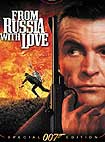
The first in a successful series of suspenseful, special agent 007 James Bond films, begun in the Cold-War 1960s and serving as a metaphor for the threat of Communism, was Dr. No (1962) followed soon after by the definitive Bond film, From Russia With Love (1963), and the polished Goldfinger (1964). The intriguing superhero lead role has been played by six actors so far:
James Bond '007' character that was employed for Her Majesty's Secret Service was loosely based on the spy character in Britisher Ian Fleming's twelve James Bond novels. Before the movies, Bond made his first appearance on TV, debuting on CBS in 1954, with Barry Nelson as the 007 agent named Jimmy Bond in an adaptation of Fleming's first Bond novel, Casino Royale.
The first in a successful series of suspenseful, special agent 007 James Bond films, begun in the Cold-War 1960s and serving as a metaphor for the threat of Communism, was Dr. No (1962) followed soon after by the definitive Bond film, From Russia With Love (1963), and the polished Goldfinger (1964). The intriguing superhero lead role has been played by six actors so far:
- Sean Connery
- George Lazenby
- Roger Moore
- Timothy Dalton
- Pierce Brosnan
- Daniel Craig
Spy Thrillers
A sub-genre of the thriller film is the spy film which can be in the form of a drama, comedy, or a action thriller. The spy film was most popular during the 1960s when the Cold War was in evidence, and audiences demanded more thriller pictures. Spy films could either be serious, fact-based stories, or fanciful-escapist films. Spies in real-world situations are often murky, unknown characters who don't want to be revealed, but are unknown, undercover agents. In any case, most spy films usually depicted spies seeking to uncover or maintain secrets from each other. Spies were usually portrayed as masquerading, amoral, and deceitful characters ready to betray others.
Examples of Spy Thrillers by Alfred Hitchcock
- The Man Who Knew Too Much (1934)
- The 39 Steps (1935)
- Secret Agent (1936)
- Sabotage (1936)
- The Lady Vanishes (1938)
- Foreign Correspondent (1940)
- Saboteur (1942)
- Notorious (1946)
- North By Northwest (1959)
Mise-en-scene
Mise-en-scene is the arrangement of everything
in a camera shot. It is very important as the viewers can pick out little
things that appear in a shot and think about what it could mean, for
example the colour red is used to represent the character Curleys wifr from the film 'Of mice and men' . The colour red can infer a range of emotions from anger to love or danger, and all three. To send the right message for the film the mise-en-scene
must be right the director is the one who looks over the mise-en-scene and they
can tell whether the actors, props, lightening, and the costumes
are all matching to the scene being shot and set the right tone for the film.
Romantic; here the colour red is used to represent love and romance.

Dangerous; here the colour red is used to represent danger.
Red herrings
Red herrings
Here is an example of a red herring;
but no one assumes that there will be a twist and the character is ill because of previously unknown food allergy, or an innocuous food poisoning mishap. At that point it would be shocking twist to discover that the person is actually being poisoned by a illness.
Say you have a character who is mysteriously ill. Everything presented in the movie leads the audience to believe that the character is being poisoned by a certain Character.
A red herring is a diversion used
to distract the audience from the original idea. Red herrings are often seen in
films, adventure games, and puzzles. In films, a red herring can often be
found in Alfred Hitchcock stories, where characters turn
out to be anything but what the viewer expects them to be. Red herring don't just occur with characters is could be the plot too.
Here is an example of a red herring;
but no one assumes that there will be a twist and the character is ill because of previously unknown food allergy, or an innocuous food poisoning mishap. At that point it would be shocking twist to discover that the person is actually being poisoned by a illness.
Say you have a character who is mysteriously ill. Everything presented in the movie leads the audience to believe that the character is being poisoned by a certain Character.
Cliffhangers
A cliffhanger is initially a plot
device in fiction which features a main character in a difficult situation, or confronted with a shocking dilema at the end of a film. A
cliffhanger is hoped to ensure the audience will return to see how the
characters resolve the dilemma.
A good example of a cliffhanger film is A nightmare in Elm street;
Tuesday, 27 November 2012
Chuck Jones
One of his most famous cartoons is 'Road Runner'. Chuck Jones made these cartoons following a clear set of rules, these rules are;
- The road runner cannot harm or upset the coyote except by going 'BeepBeep'
- No other outside force can harm the coyote only his own mistakes or the failure of acme products can
- The coyote coud stop at any time
- No dialogue besides 'BeepBeep'
- Road runner must stay on the road
- All action must be confined to the natural environment
- All stuff used by Coyote must be made by Acme
- make gravity the coyotes worst enemy
- Coyote is always more humiliated than hurt
Types of thrillers
' A thriller is a very difficult genre to pin down because it covers such a wide range of films. Thrillers are films of suspense that are supposed to instil terror into the audience' Susan Hayward.
- Spy Thrillers; Bond, Bourne films, Mr and Mrs Smith
- Political Thrillers; Nick of time, Manchurian candidate
- Conspiracy Thrillers; Conspiracy theory
- Legal Thrillers; Pelican brief
- psychological Thrillers; Psycho
Sound
Sound
Diegetic sounds are sounds that are implied to be there by the characters, it is also called real or actual sound, voices and objects that can be seen are diegetic sounds as they belong in the world of the film.
Non diegetic sound is a device used that is not meant to be there it does not fit in in the world of the film. Non-diegetic sound can include sound effects.
Diegetic sounds are sounds that are implied to be there by the characters, it is also called real or actual sound, voices and objects that can be seen are diegetic sounds as they belong in the world of the film.
Sound bridges are a sound that cannot be seen when its made but it has relevance to the scene, an opening of a door which is not scene can be used to show that a new character has entered the scene.
Wednesday, 14 November 2012
Psycho
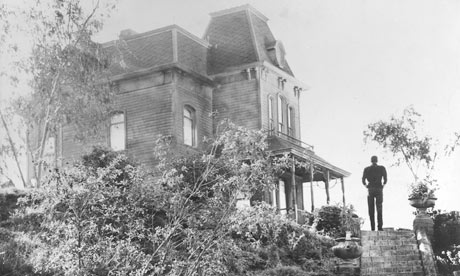
Psycho has the constant element of what is going to happen, curiosity, suspense and tension build as the film progresses. The story is all a Maguffin we are originally led to believe that the money stolen at the beginning is the reason for things happening, however the plot unravels and the story is really about a motel owner Norman Bates a man with a deranged mind that shows a twisted ill side of him.
Sweaty, leery, cowboy-hatted businessman Tom Cassidy has come into the office of a Phoenix realtor, George Lowery, to close a house purchase in cash: an ostentatious wedding present for his 18-year-old daughter, due to get hitched the next day.
He boasts to the secretary, Marion Crane, that the $40,000 he's waving under her nose has been amassed without reference to the tax authorities. He even brags that he never carries more than he can afford to lose. In a shrewd instant, Marion reaches a conclusion Hitchcock cleverly never spells out. If she steals his money, he can take the hit and won't call the cops because that would alert the IRS. She's right. As things turn out, Cassidy only engages a private detective, the stolid Arbogast.
Lost and disorientated on the rainy highway, runaway Marion winds up in a remote motel – not so different from the hotels where she enjoyed furtive lunch hours of passion with her lover. It is run by a strange taxidermy enthusiast, Norman Bates, played by a saturnine Anthony Perkins.
North by North West
North by North west
protagonist Roger Thornhill, played by Cary Grant — a playboy ad executive who lands himself in trouble when he is mistaken for a spy and kidnapped, throwing his life into chaos and a huge mess as he plays an increasingly dangerous game of cat and mouse with his abductors and the authorities. It’s only because of this game that he meets Eve Kendall, played by Eva Marie Saint, a love interest who twice helps him evade capture.

protagonist Roger Thornhill, played by Cary Grant — a playboy ad executive who lands himself in trouble when he is mistaken for a spy and kidnapped, throwing his life into chaos and a huge mess as he plays an increasingly dangerous game of cat and mouse with his abductors and the authorities. It’s only because of this game that he meets Eve Kendall, played by Eva Marie Saint, a love interest who twice helps him evade capture.
North by Northwest is often credited as being the first sequence to use kinetic type — or simply, type in motion. It is also one of the first examples of situational type in film, where the text is integrated into the environment by matching its perspective, a technique famously revisited by Picture Mill for David Fincher’s Panic Room in 2002.
Although Bass was already an established designer by 1959, North by North west is likely his first truly modernist title sequence, adopting a clean, minimal style and a veneer of graphic sophistication previously unseen in his title work or elsewhere in mainstream film. It’s a style that he carried into his next two projects, Psycho and Ocean’s Eleven, and would revisit almost 30 years later for Good fella's in 1990.
Tuesday, 13 November 2012
BILLY BOND by Rachel, Billy, Rosie and Kelsey
Over the past few weeks we was given the task of filming a short sequence of camera shots whilst filming a thriller. In our sequence we used many camera shots to ensure we met the goal of creating an atmosphere of suspense and tension.
Hope you enjoy our film.
Word bank
Macguffin;
shock;
suspense;
- a plot element that catches the viewers' attention or drives the plot
shock;
- A sudden upsetting or surprising event or experience.
- symbolic representations, which often has a conventional meaning attached to an image or object.
suspense;
|
Monday, 12 November 2012
Things associated with thrillers
Here I will be talking about iconography usually associated with the thriller genre. Thrillers are easy to analyse because they often have various pieces of iconography associated with them. Iconography is very important as it is part of the mise-en-scene and therefore helps to construct certain messages for the audience.
Knives:


Knives are a typical symbol associated with a thriller as they have connotations of blood, death, pain and brutality. A typical representation of this would be in the famous knife scene from Hitchcock's film 'Psycho'. Knives are often used to show that somebody is going to get killed and thus it acts a common device to keep the audience engaged.
Shadows:

Silhouettes and shadows are what give a thriller the enigma and mystery for the audience. Shadows are a common piece of iconography associated with the thriller genre because they build up fear in the audience, by instigating that the protagonist is being watch by a human being or some kind of animal/monster. The protagonist is often oblivious to this but can often sense that something isn't right, which leads them on their journey. They often induce thoughts of fear and darkness for the audience as well as giving them clues and they ask questions out of suspense. A character with a silhouette is most likely to be the antagonist, which usually isn't revealed until the end of the film.
Confined spaces:


The use of confined spaces in a thriller also makes the audience feels as though they are too trapped. Being in a confined space often leads the protagonist to start breathing heavily and panting to inform how they are trapped and cannot escape, or it often leads to the start of their struggle as they try to break free.
Woods:

Woods are locations often used for thrillers. This is because they create a sense of being lost as the characters find themselves tyring to figure out how to escape. Woods are often isolated too, which creates a sense of vulnerability and it seems inevitable that the characters will ever find any help. There may be one house in the woods which often turns out to be the antagonist.
Running water:

Running water is often a symbol of death as it suggests the draining of life or it is often associated with blood dripping and suggests that the characters are in danger.
Street lamps:

Street lights at night are often used in thrillers to keep the emphasis and focus on the protagonist and the fact that there is almost complete darkness surrounding them, apart from the spotlight from the lamp. This further accentuates the fact that the protagonist is alone in the dark and creates fear for the audience as they do not know what might be underlying in the darkness and therefore a tense atmosphere is created.
Bars on windows and fences:


Bars on windows are used to show imprisonment and isolation, which links to the conventional thriller. Fences consisting of razor barbed wire also suggest that the characters are imprisoned and have no way of getting out which shows how they are detached from the outside world and therefore conforms to the convention of isolation in thrillers.
Cities:

Psychological thrillers often take place in a city which brings all of the drama closer to home. This often gives a sense of reality for the audience.
Birds
Birds
We recently watched a film called "The Birds" a film directed by the great Alfred Hitchcock, the film is a thriller that is about a change in the behavior of the birds that live in bodega bay. The birds turn and start to attack to the residents. A wealthy San Francisco socialite pursues a potential boyfriend to a small Northern California town that slowly takes a turn for the bizarre when birds of all kinds suddenly begin to attack people there in increasing numbers and with increasing viciousness. In the commercial for a diet drink, Tippi Hedren (main character) is seen walking down a street and a man whistles at her slim, attractive figure, and she turns her head with an acknowledging smile. In the opening scene of the film, the same thing happens as she walks toward the bird shop. This was an inside joke by Hitchcock. attacks start taking place when Tippi Hedren visited bodega bay in hope to shock a man she had finally fell for. During the attacks when the children are running down the street from the schoolhouse, extra footage was shot back on the Universal sound stages to make the scene more terrifying. A few of the children were brought back and put in front of a process screen on a treadmill. They would run in front of the screen on the treadmill with the Bodega Bay footage behind them while a combination of real and fake crows were attacking them. On a couple of occasions during the shoot, a number of the children in the front fell and caused the children in back to fall as well. It was a very difficult scene to shoot and took a number of days to get it right. The birds used were hand puppets, mechanical and a couple were trained live birds. When audiences left the film's UK premiere at the Odeon, Leicester Square, London, they were greeted by the sound of screeching and flapping birds from loudspeakers hidden in the trees to scare them further. The scene where Tippi Hedren is viciously attacked by birds near the end of the movie took a week to shoot. The birds were attached to her clothes by long nylon threads so they could not get away. After shotting this film Tippi Hedren had to persue cancelling as she didnt know what was actually going to happen in the scene until the filming of it, she waqs literally terrified of them in real life! .The film does not finish with the usual "THE END" title because Alfred Hitchcock wanted to give the impression of unending terror.

We recently watched a film called "The Birds" a film directed by the great Alfred Hitchcock, the film is a thriller that is about a change in the behavior of the birds that live in bodega bay. The birds turn and start to attack to the residents. A wealthy San Francisco socialite pursues a potential boyfriend to a small Northern California town that slowly takes a turn for the bizarre when birds of all kinds suddenly begin to attack people there in increasing numbers and with increasing viciousness. In the commercial for a diet drink, Tippi Hedren (main character) is seen walking down a street and a man whistles at her slim, attractive figure, and she turns her head with an acknowledging smile. In the opening scene of the film, the same thing happens as she walks toward the bird shop. This was an inside joke by Hitchcock. attacks start taking place when Tippi Hedren visited bodega bay in hope to shock a man she had finally fell for. During the attacks when the children are running down the street from the schoolhouse, extra footage was shot back on the Universal sound stages to make the scene more terrifying. A few of the children were brought back and put in front of a process screen on a treadmill. They would run in front of the screen on the treadmill with the Bodega Bay footage behind them while a combination of real and fake crows were attacking them. On a couple of occasions during the shoot, a number of the children in the front fell and caused the children in back to fall as well. It was a very difficult scene to shoot and took a number of days to get it right. The birds used were hand puppets, mechanical and a couple were trained live birds. When audiences left the film's UK premiere at the Odeon, Leicester Square, London, they were greeted by the sound of screeching and flapping birds from loudspeakers hidden in the trees to scare them further. The scene where Tippi Hedren is viciously attacked by birds near the end of the movie took a week to shoot. The birds were attached to her clothes by long nylon threads so they could not get away. After shotting this film Tippi Hedren had to persue cancelling as she didnt know what was actually going to happen in the scene until the filming of it, she waqs literally terrified of them in real life! .The film does not finish with the usual "THE END" title because Alfred Hitchcock wanted to give the impression of unending terror.
Tuesday, 6 November 2012
Understanding Film language
Film language
Camera shots
Camera shots
- Panning; This movement scans a scene horizonatally, looking like its looking around the room
- Tilting; This movement scans up and down a scene asif it was looking someone up and down
Camera angels
- EWS (Extreme Wide Shot); The view is so far from the subject that it isn't even visible. Often used as an establishing shot.
- VWS (Very Wide Shot); The subject is only slightly visible but the emphasis is still on placing it in its environment.
- WS (Wide Shot); The subject takes up the full frame, or at least as much as comfortably possible.
- MS (Mid Shot); Shows some part of the subject in more detail while still giving an impression of the whole subject.
- MCU (Medium Close Up); Half way between a MS and a CU.
- CU (Close Up); A certain feature or part of the subject takes up the whole frame.
- ECU (Extreme Close Up); The ECU gets right in and shows extreme detail.
- Cut-In; Shows some (other) part of the subject in detail.
- CA (Cutaway); A shot of something other than the subject.
- Two-Shot; A shot of two people, framed similarly to a mid shot.
- OSS (Over-the-Shoulder Shot); Looking from behind a person at the subject.
- Noddy Shot; Usually refers to a shot of the interviewer listening and reacting to the subject.
- POV (Point-of-View Shot); Shows a view from the subject's perspective.
Sounds
- Diegetic
- Non Diegetic
- Sound bridge
- parallel sound
- contrapuntal sound
Lighting
- Key light
- back light
- Filler light
- Under lighting
- Top lighting
- Back lighting
- Low key lighting
- High key lighting
Course work low down
Coursework Insite
50% of AS Level
Two pieces of coursework
- Preliminary; Short filmed sequence demonstrating basic understanding of Film Language
- The titles and opening of a new fiction film in the 'Thriller' genre
The coursework must also be accompanied by a blog demonstrating Research,Planning and Evaluation.
Subscribe to:
Posts (Atom)